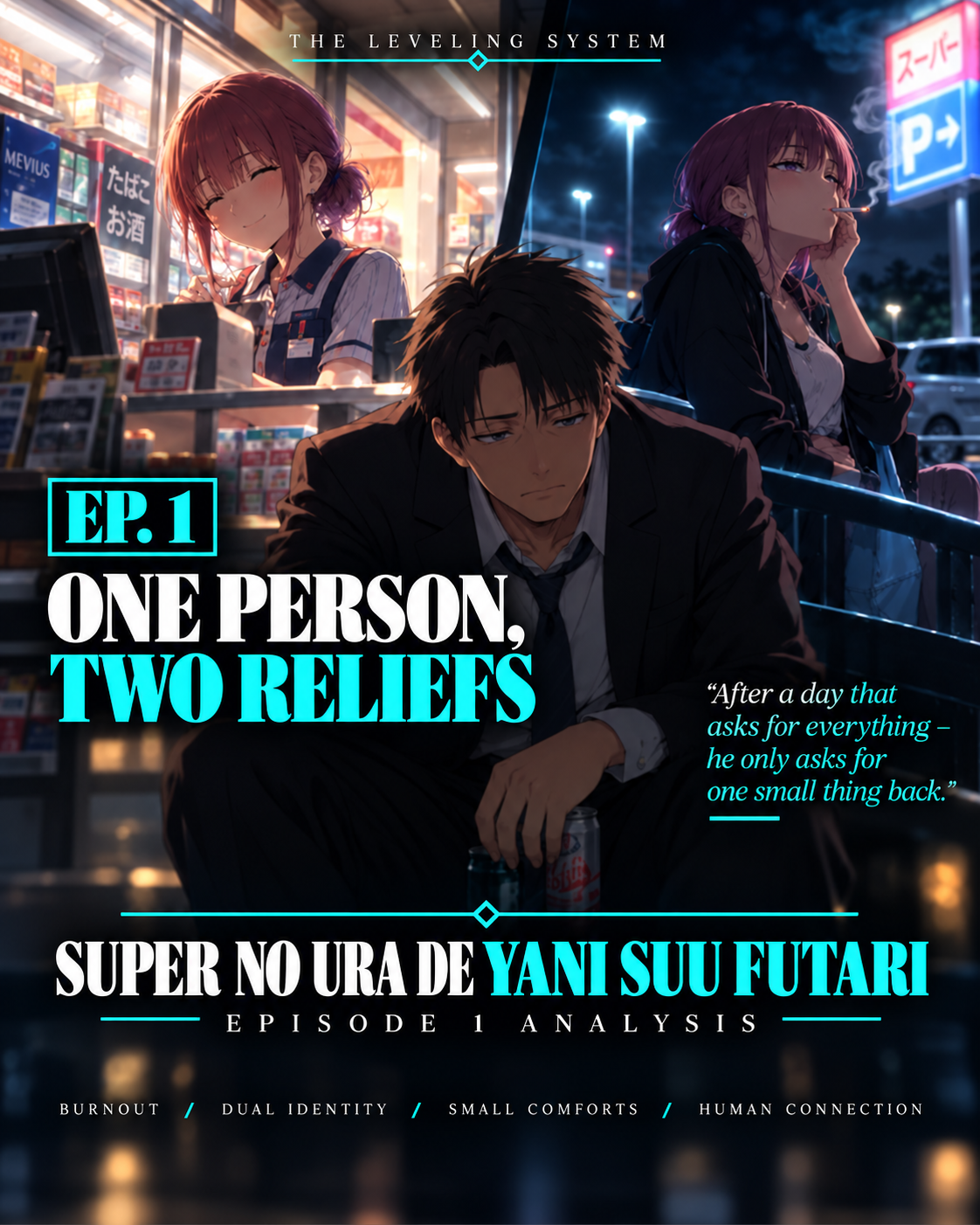
After a day that asks for everything – he only asks for one small thing back.
The Leveling System
The first episode of Super no Ura de Yani Suu Futari (Smoking Behind the Supermarket with You) begins with a man smoking alone on a rooftop and ends with him standing at a convenience store register, having unknowingly grown close to the same woman twice over. Between those two moments, the episode builds something more sophisticated than a story about a workplace crush: an analysis of exhaustion, of the small manufactured pleasures people use to get through an unrewarding day, and of how the self a job requires can differ from the self a person only gets to be once it’s over.
The focus falls on two people. Sasaki, who spends the episode chasing relief without ever noticing where it’s actually coming from. And the cashier behind it, split into Yamada and Tayama, sincere on the clock and finally herself the moment she’s off it.
A Day Built to Wear Him Down
Sasaki opens the episode alone, smoking on a rooftop. A coworker tracks him down, annoyed, reminding him a meeting is waiting. That’s all we get, and that’s all we need. A man choosing to be by himself, mid-workday, with a cigarette.
What follows is a compressed workday montage. Sasaki solves problems at his own desk, gets pulled away to fix a junior coworker’s mess, then reports to his boss at the end of it all. The sequencing matters. Help comes first, his own work comes last, and the accounting for it happens after everyone else has already been served.
By the time he’s slumped on the evening bus, nearly asleep, the exhaustion isn’t dramatized, it’s administered. The show underlines this with a small detail: stepping off the bus into his own neighborhood, he exhales, visibly releasing tension his body had been holding all day. The score softens into something domestic here, signaling this is habit, not incident. Then he reaches a convenience store called Super S, and smiles for what feels like the first time all day.
The Actual Purchase
He buys a small snack, something to drink. On paper, unremarkable. But the show is careful to show us what he’s actually there for, and it isn’t in the basket. It’s Yamada, the cashier, and the warmth she greets him with.
This is a familiar shape of adult exhaustion. The day extracts labor and gives nothing back, so the evening becomes a search for some small proof that showing up mattered to someone, some form of reward for having survived it. Sasaki finds his in a two-minute transaction at a register. It isn’t reckless, nothing suggests it’s spiraling toward something self-destructive, but it is quietly precarious, because the warmth he’s leaning on is professional by design. Being kind to customers isn’t affection, it’s the job description. Sasaki knows this on some level and comes anyway. The nicotine and the smile at the register are functioning as the same category of relief, two small, manufactured pleasures standing in for a reward the day never actually gave him.
When the Substitute Isn’t Available
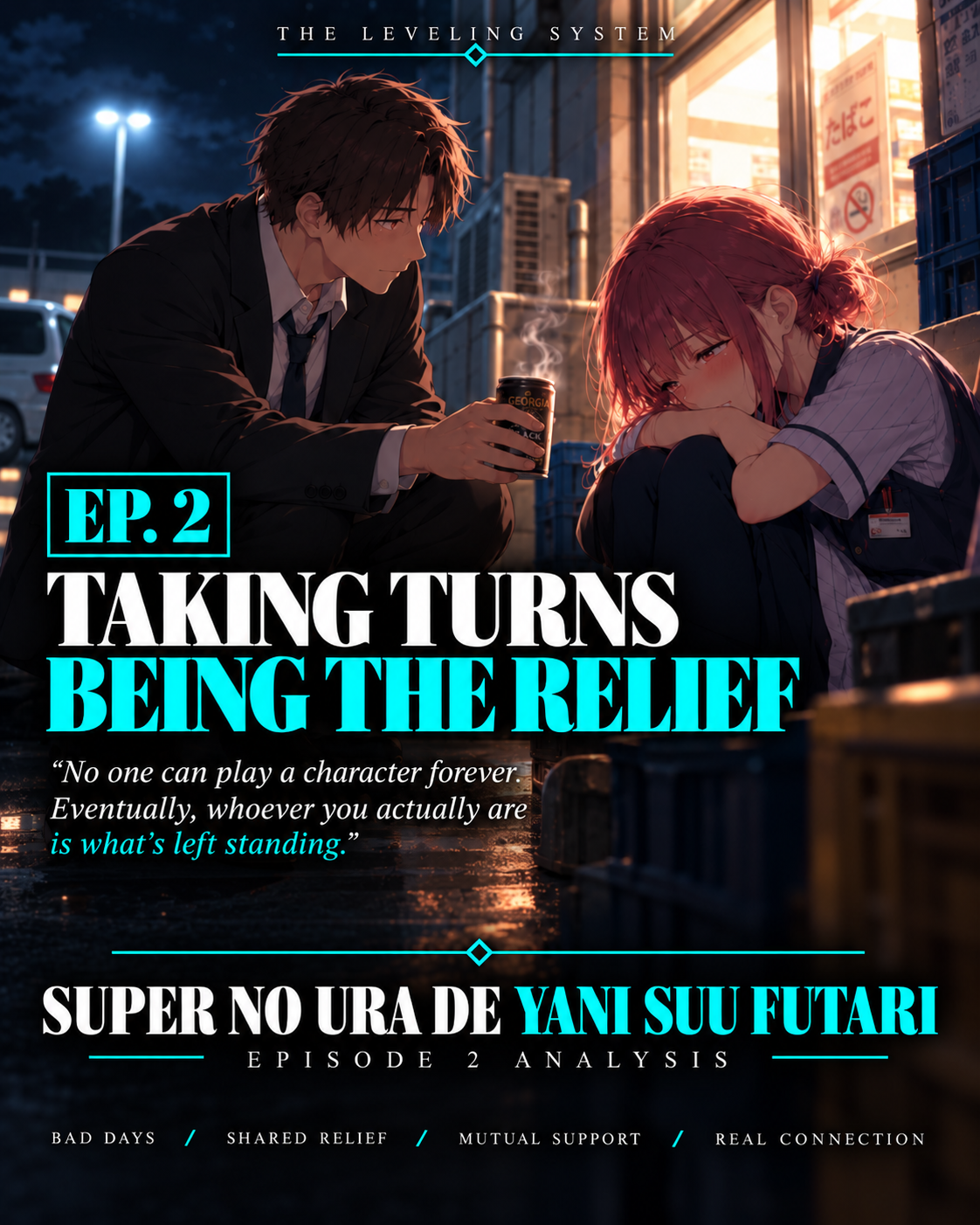
The next stretch plays almost like a controlled experiment. His boss dresses him down over something he was never informed about. A colleague demands a budget report that doesn’t exist yet, due tomorrow. Another meeting drags on until ten at night, one of those meetings that seems to exist for its own sake rather than to reach any real decision. Sasaki tells himself he still has his nicotine, his Yamada, waiting to patch him up. Then he drags himself to Super S at the end of it and she isn’t there.
Denied his usual outlet, he falls back on the chemical one, lighting a cigarette in the wrong spot and getting told off for it. Someone in the parking lot calls him over instead. It’s a woman with a build that echoes Yamada’s closely enough that we clock it immediately, even if Sasaki doesn’t. She’s playful where Yamada is composed, teases him for being a Super S regular’s cliché, always the same register even when every lane is open, and eventually admits, in her own roundabout way, that his loyalty to that checkout line flatters her too. He’s hooked, completely caught off guard by her, and leaves without quite knowing what to do with the feeling.
A Reveal for Us, Not for Him
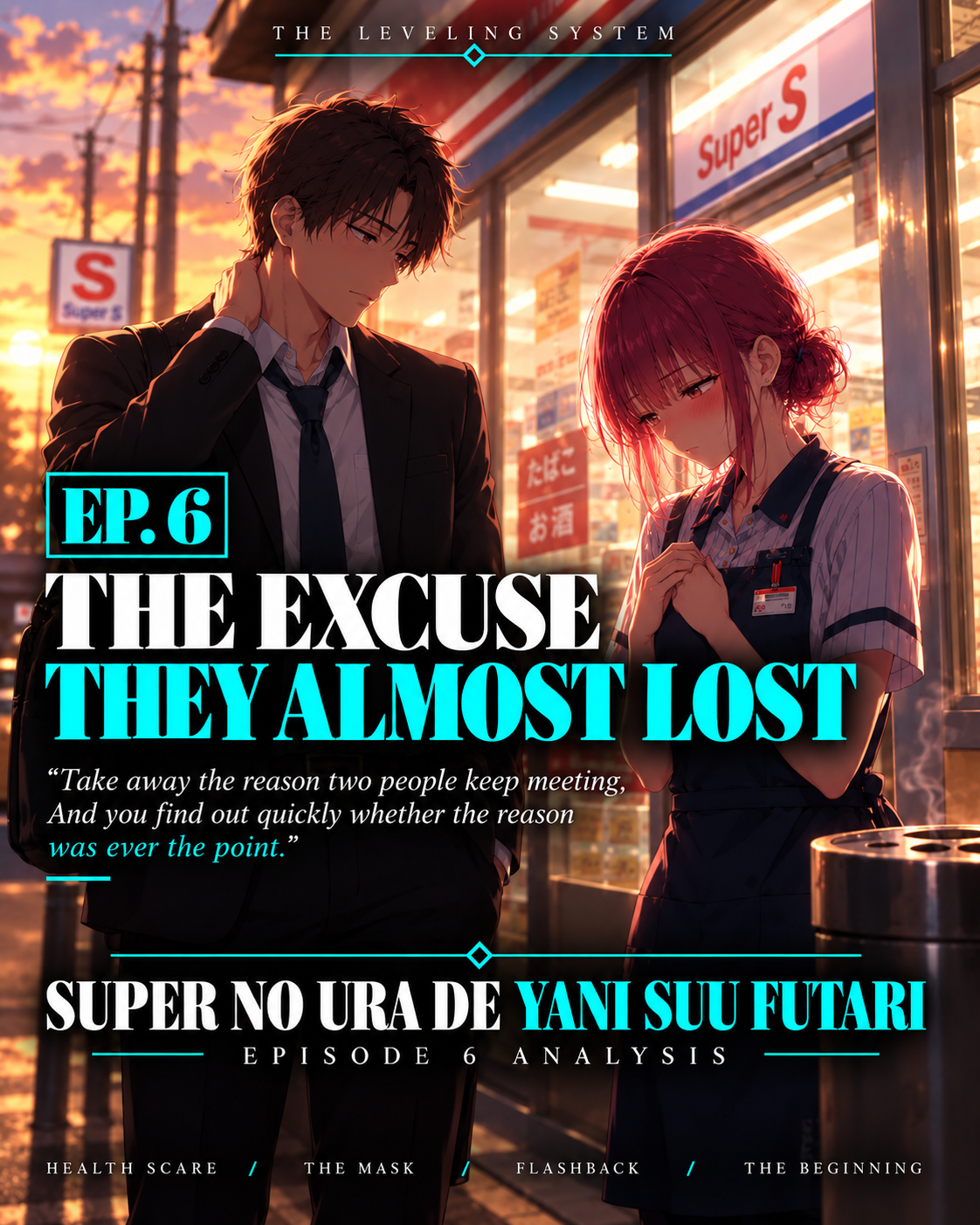
The next time he’s at Yamada’s register, she thanks him, on behalf of the other cashier, for something nice he apparently said about her service. Sasaki is mortified. The name she gives for that other cashier is Tayama, and for anyone reading the kanji, it isn’t just similar to her own, it’s her own name written backwards: Yamada is 山田, mountain then field, Tayama is 田山, field then mountain. She didn’t invent a stranger, she flipped herself around. It’s the show’s way of confirming, for us, what Sasaki has no reason yet to suspect: Yamada and the woman from the parking lot are the same person.
He doesn’t make that connection himself, not consciously. What actually rattles him is smaller and more personal: the realization that his habit, always the same register, on purpose, has been noticed and named back to him. He isn’t unsettled because he suspects a secret identity. He’s unsettled because he’s been seen doing, deliberately, the thing he thought was quietly his own business. That’s a meaningfully different kind of exposure, and it’s why he detours past the store’s back entrance the next day, just to check if she’s around, before he can even approach the register at all. He’s not managing two women. He’s managing one embarrassment he doesn’t understand the shape of yet.
Her Side of the Same Trade
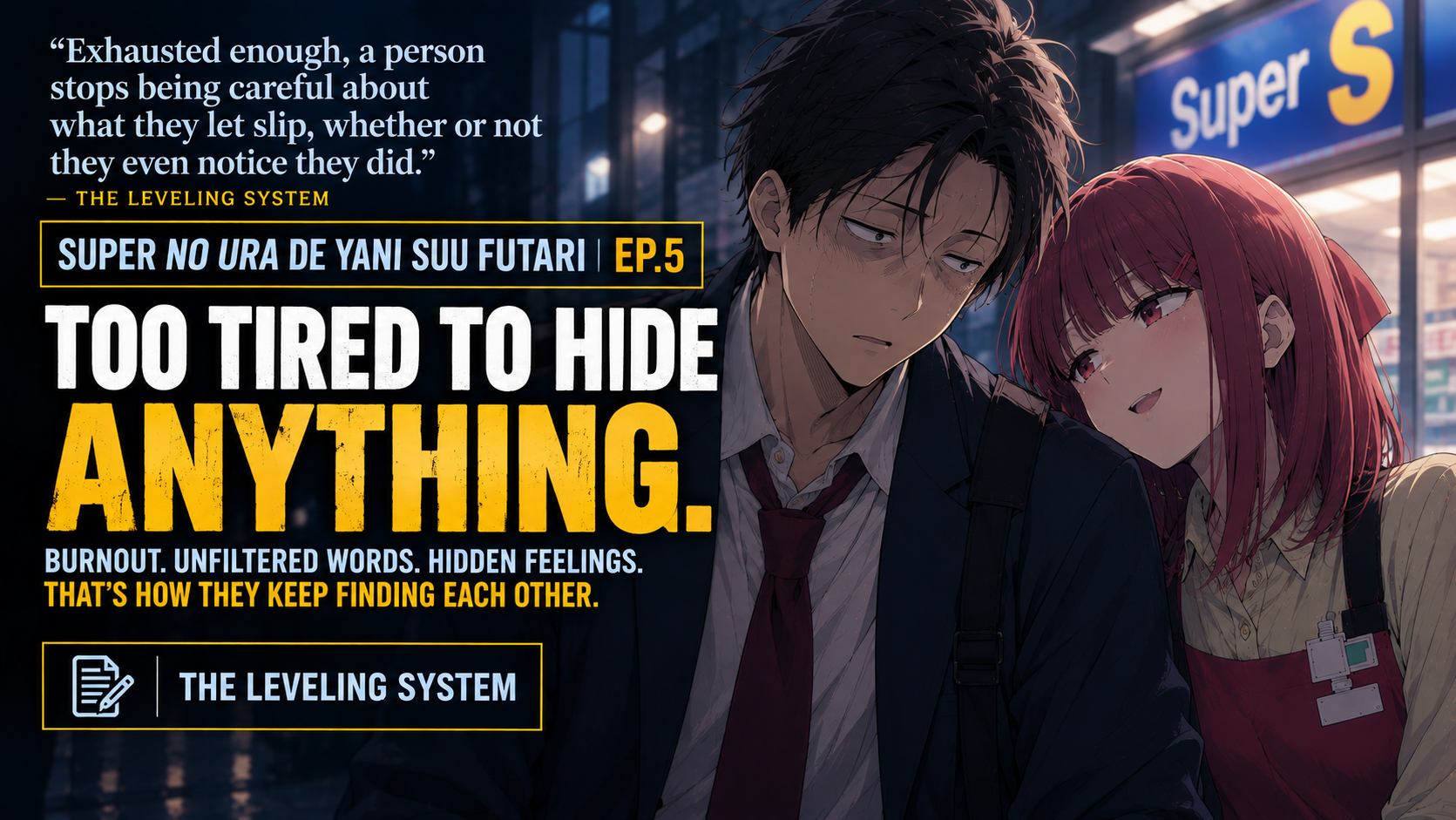
A few days later, a mistake of a new hire eats up Sasaki’s evening, and he arrives at Super S just as Yamada’s shift ends, missing her by minutes. The other cashier appears instead in the same spot, calling him “old man” for what he’s bought, ribbing him for having left his cigarettes at the office, then offering hers anyway. It plays as comedy, but it suggests something real underneath it: this looser, unfiltered version of herself might be the one thing in her day that isn’t being performed for anyone’s benefit but her own. If Yamada’s warmth is manufactured for Sasaki, we can suspect that this moment might be her equivalent of his cigarette, the one time she gets to stop working at being liked.
Two People, One Friendship
By the closing scene, the show quietly folds both halves back into the same frame without Sasaki noticing it happen. He leaves behind a snack he has extra of, from buying one at Super S nearly every day, and a coworker teases him for the habit, telling him to just stop going if he isn’t even going to eat what he buys. He goes anyway. At the register, Yamada mentions, warmly, that the snack he always buys is nice, the exact thing he’d mentioned in passing to Tayama the day before, not to her. Yamada shouldn’t know that. Tayama does. It’s a small moment, but it’s the clearest signal yet, for us, that there was never really a wall between the two halves of her to begin with, only a shift schedule.
Conclusion
Strip away the mystery of who Tayama really is and what she and Sasaki actually are to each other, and what’s left is still the more important story: a man who works too hard, gets nothing back for it, and ends every day hunting for some small, manufactured hit of pleasure to make the exhaustion worth it. A cigarette. A smile at a register. Whatever’s on offer. The show doesn’t moralize about that need, it just keeps following him back to Super S for more of it, one register at a time. What makes the episode sharper than it needed to be is that he’s chasing two rewards without knowing they come from the same source. He thinks he has a cigarette and a friendly cashier keeping him upright. He actually has one person, split down the middle, gracious in the self her job asks of her and unfiltered in the self she only gets to be once that shift ends, and no idea he’s leaning on both halves of her at once.
Perhaps that’s the episode’s quietest observation. After a day that asks for everything, people rarely need something extraordinary in return. Sometimes, all they need is one place where they no longer have to carry the weight of the day alone.
Continue reading